Monday, August 03, 2015
Mann kasturi re, Jag dasturi re...
Saturday, May 23, 2015
Motion, driven by emotions
Friday, November 14, 2014
To be or not to be, that is the question
![]() |
| Image Courtesy: www.bookmyshow.com |
Saturday, October 05, 2013
The one with the hole: Dunkin' Donuts, CP
Wednesday, September 25, 2013
The old warhorse: Swagath, GK-2
![]() |
| Image courtesy www.swagath.in |
Friday, September 20, 2013
Stairway to Heaven: Escape, Galleria
Wednesday, August 28, 2013
Get your hands dirty: Andhra Bhawan, Ashoka Road
Sunday, August 18, 2013
Charms, Spells, and Potions: The Leaky Cauldron, Hauz Khas Village
Saturday, July 20, 2013
Old World Charm (??): Parikrama, Connaught Place
Friday, June 28, 2013
Big name, small sight: Chor Bizarre, Delhi Gate
Friday, May 31, 2013
Calm Musings: Barka Med Lounge, GK-2
Thursday, May 30, 2013
Interesting Cacophony: Uber Lounge, GK-2
Tuesday, May 28, 2013
Super Chef: Indian Accent at the Manor
Tuesday, December 20, 2011
Self-destructing in 5 seconds...
This is your mission...should you choose to accept it.
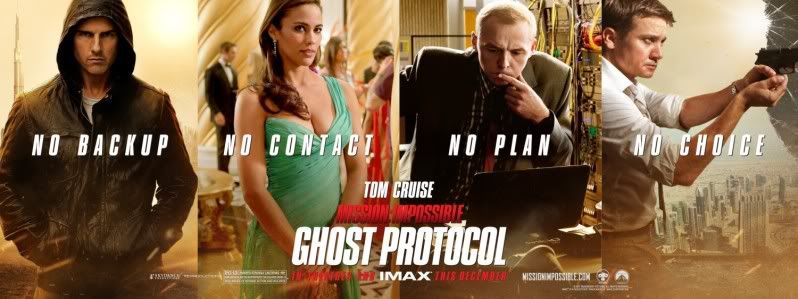
Mission Impossible it is, what with escaping from a Russian prison, breaking into Kremlin (of all places for an American to break into), jumping about outside the glass walls of the Burj Khalifa, the tallest building in the world and chasing cars in the Dubai sandstorm, and finally driving at break-neck speed supposedly on the roads of Mumbai. A collage of some really fast-paced action sequences with not too much of a plot to speak of, Mission Impossible's latest franchise impresses as an all-out entertainer.
Brad Bird brings a fresh perspective to the MI series and instead of following the established formula of a mixture of intrigue and action, he tilts this edition towards a very tight, action-packed succession of sequences that leave the viewer with hardly any time to breathe or think about the plot or the supposed lack of intrigue in it. Making excellent use of the image created by Tom Cruise over the three editions of the MI franchise, Bird deviates from the one-man-army heroism that Ethan Hunt is known for and in the process, adds some more central characters and subsequently, some more jazz to the proceedings.
The plot is simple enough with a former Russian nuclear strategist turning rogue and managing to get away with Russian nuclear launch device and codes. His objective is to start a nuclear war between Russia and America by ensuring the first strike and the mission of Tom "Ethan Hunt" Cruise and his team is to stop him. A pretty linear plot is embellished with twists and turns, if not to the story, then at least to the sequences with even a simple entry into the safe house (in the form of a rail wagon) being made quite interesting with the treatment it is given. Urgency is palpable and the turn of events fraught with a sense of daredevilry that is bound to appeal to audiences worldwide, cutting across cultures and sensitivities.
The acting department is managed effectively by Tom Cruise who breezes through playing the character of Ethan Hunt that has probably added more to his career than any other franchise (notwithstanding even Top Gun). The support cast is starred by the irrepressible Benji Dunn (played by Simon Pegg) who provides much of the comic relief to the movie. Paula Patton playing Agent Jane Carter and Jeremy Renner playing Analyst William Brandt seem a little awkward in their roles and get overshadowed by Tom Cruise's portrayal of Ethan Hunt. The sheer charisma of Ehtan Hunt, or the chutzpah of Benji Dunn does not appear to be matched by the other two characters.
And oh...Anil Kapoor has a blink-and-you-miss-him role in the movie; criticized by many for the sheer foolishness of the character he plays (Brij Nath, an Indian billionaire and owner of a telecom company in Mumbai that has access to the satellite which is to be used by the Russian villain to launch the nuclear missile). Remember however, that this is Mission Impossible and not Ram Lakhan and the person we normally think of as a hero is but a fringe player in the much larger scheme of things...the huge franchise that Mission Impossible is. His mere presence (and not a completely inconsequential role at that) in such a franchise is indicative of the fact that India is too big a market now for even Hollywood to ignore.
The direction is top notch with the editing although, despite the movie being so fast paced, ever so slightly slipping in the process to try and establish some emotional connect with the audiences. The rest of the sequences are so fast that even a couple of minutes of dialogue (whenever Hunt starts talking to Carter about her loss or to Brandt on the latter's insecurities) seem a waste of time and almost sleep-inducing. Action sequences, on the other hand, are wonderfully shot and form the high point for the movie, something that you wouldn't mind watching twice for the sheer beauty of it all. Executed to the tee by Cruise and company, the movie's action comes across as probably the best for quite some time.
The use of gadgets and gizmos is impressive to a fault. Whether it is the master key computing and figuring out the number pass codes from a huge array of possibilities, or the slightly funny and incredulous hoodwinking of the Kremlin security guard using a screen and a projector, all of them add to the fun and frolic. The background score (with the imitable Mission Impossible signature tune) is extremely effective in highlighting all the action and drama, keeping audiences at the edge of their seats for most of the time.
The Ghost Protocol having been enforced with the American President directing that Cruise and his agency, the IMF is disavowed, the stakes are high. Despite the risk of being branded a terrorist in case of failure (or death), Ethan Hunt and his team break through the plans of the Russian anarchist and save the world yet again. As Hunt hands over the next missions to his team and goes about accessing his own, one can't help but wonder as to what is next for this 50 year old (yes, that is how old he actually is, never mind what he looks like in the movie) and for the MI franchise itself.
Tuesday, August 18, 2009
Kabhi hum kaminey nikle, kabhi doosre kaminey
Abe 'fa' ko 'fa' nahi to kya 'la' bolega
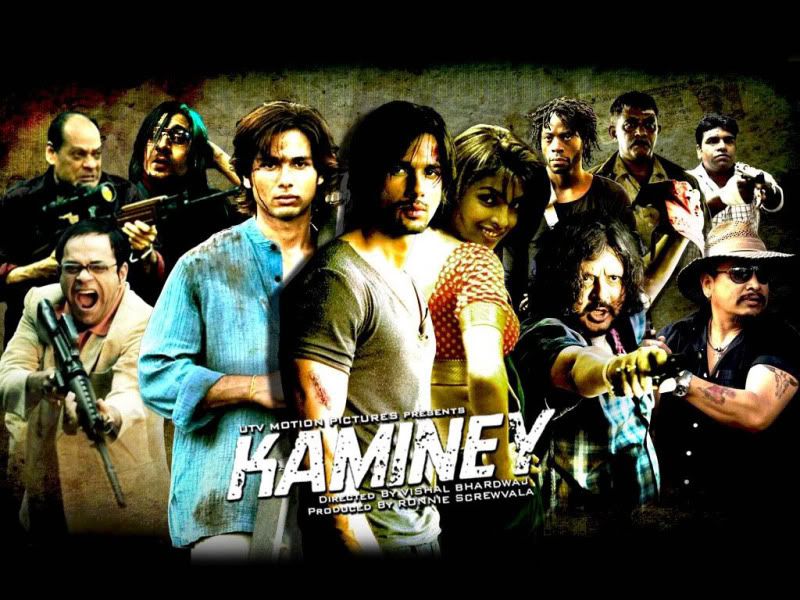
and it goes...Dhan ta nan. One of the most anticipated talked-about and hyped movies of the year, Kaminey does not disappoint, not in the least. In spite of the overwhelming majority coming out in fully voiced approval of the film, there is always the lurking doubt in one's mind as one watches the scenes unfold. Will it live up to the expectations built by such strong feedback coming in from almost all quarters? Is it another case of might becoming right and people following the herd and talking in a certain manner just because everyone else is? Will all the talk about getting your brains along for the movie and respecting viewers' intelligence be just a carefully orchestrated PR strategy? Is there really path-breaking, cult-forming cinematic excellence at display?
It may not perhaps be said that Vishal Bhardwaj's effort is perfect but it is as close to it in today's times as it can be. Building up the story and all the while challenging the viewer to continually think, interpret situations and get the hang of the story a la Johny Gaddar or DevD, Kaminey seems to have vowed to not let the viewer slip into mental slumber. All events of import post the interval are linked to stuff that is not explained by dumbing it down but more so in passing reference, by just displaying events as they take place with the freedom given to the viewer to form whatever conclusions she wishes to form.
The thread of the story is not lost anywhere what with the careful plot construction that takes place, involving all characters in a blitzkrieg of slides in the lives of the twins, Charlie and Guddu. There are a lot of characters intertwined with these two and the beauty of the movie lies in the finesse with which each one of these supposedly ancillary characters are sketched out. You can not help but wonder at the ingenuity with which the screen comes alive upon each appearance of the Maharasthtrian-speak politician of Amole Gupte, the fiery Marathi mulgi of Priyanka Chopra, the cocaine-addicted whacko gangster of Chandan Roy Sanyal, even the bit characters of corrupt narcotics cops and other gangsters (some of them even imported from Africa).
Vishal Bhardwaj, it will suffice to say, has done it again. Not only has he done an extremely fine job in directing a motley crew of relative newbies to the formulaic Bollywood, he has also worked wonders with the more established cast of Shahid and Priyanka. Shahid delivers on the front foot in his twin role with the two brothers actually coming across as being as different as chalk and cheese. The beefy, catcall-inducing gangster is innocently devilish while the stammering simpleton comes across as the eyes-averted, mentally slow and introverted idealist.
Priyanka Chopra does a fine act as the fiery and gutsy modern-yet-traditional belle who can lie through her teeth, plan much before she gets to act, and even shoot at her brother (in clear deviation from the standard Bollywood lore...even though the gun was out of bullets when she shot it, she did shoot) as long as the end is clear and worthy. Not too much to look at sans her made up and glammed avatar, she still comes across as an actress who is taking leaps and bounds to the grease paint.
As mentioned earlier, each of the other actors in the movie deserve special mention for the way they have, under Vishal's able direction, of course, brought alive the various characters of the movie. Gupte, Sanyal and Co., take a bow!
To top it all, the music of the movie really fits the folds almost seamlessly. Whether it is playing in the background to add to the excitement of chase sequences, or in the foreground in all its psychedelic glory, "Dhan ta nan" rocks...and so does the rest of the musical score re-emphasizing the multi-talented genius of Vishal Bhardwaj. Even the placement of the timeless classic "Duniya me logo ko dhoka kabhi…" is spot on. Consider innocuous songs like phataak, or the one accompanying the celebratory bridal participation in what is supposed to be the groom's baraat, nothing seems to be even an inch adrift.
The story line of Kaminey may admittedly be slightly thin and oft repeated in the Mumbai (or is it Bambai) film industry (identical twins caught up in each other's lives) but it is the treatment that gets this movie up to the tops. It is the small nuances that tease the viewer to apply her mind, to decide for herself if the movie is up to her standard or vice versa. What makes this one special is the pun in showing an auto rickshaw with its clearly displayed meter reading "For Hire" as the corrupt cop is shot down. What works for this movie is the immensely humorous jab in the bad-guy Shahid replying to the plea of the good-guy Shahid of his wife being pregnant by asking him tongue-in-cheek, "to kya meri kokh ("coke") ujaadega?"
Tuesday, March 17, 2009
Ghate do to bache kya?

Jaise door des ke tower me ghus jaaye re aeroplane
Jaise sare aam Iraq me jaake jam gaye Uncle Sam
Jaise Bisleri ki bottle pike ban gaye English Man
Jaise har ek baat pe Democracy me lagne laga hai ban
Jaise bina baat Afghanistan ka baj gayo bhaiyya band
Jaise door desh ke tower me ghus jaaye re aeroplane
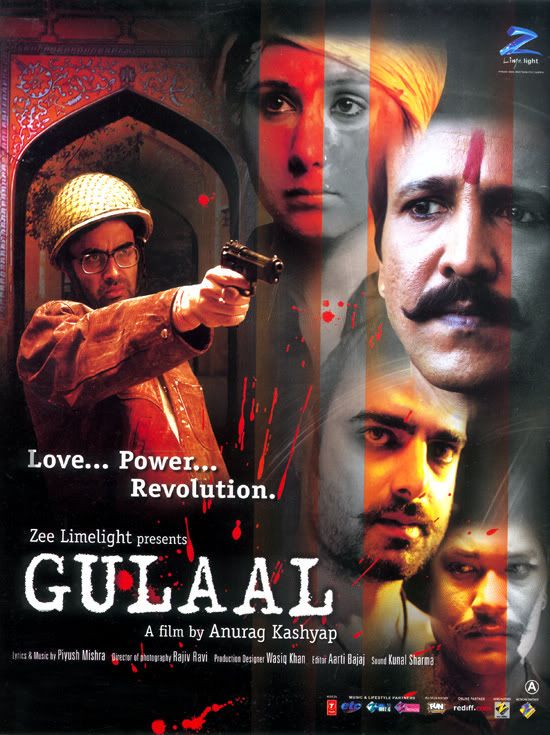
Anurag Kashyap does it again. In fact, he did it again when he did it in DevD. This was what he did before DevD was completed and even if you may say that he did it better the second time, he still did it damn better than most others even the first time around. Coming after Black Friday and No Smoking, with Gulaal, Kashyap has gone really deep into the web of ambition, greed, and angst as he weaves his characters around it.
Set against the backdrop of the Rajputana movement and its overlap with student politics in the local university, Gulaal's storyline seems to be incidental to the real tale that is attempted at being told. This, perhaps, is the weakest link in the movie and it is difficult to say if this was intentional or otherwise...once human feelings and emotions take center stage in such strong fashion as in Gulaal, it is anyway difficult to do justice to anything else.
As you see Dilip Singh (Raja Chaudhary) move in with Rananjay Singh aka Ransa (Abhimanyu Singh) and are just settling into the movie just as Dilip is trying to settle in a new city and university, you are caught unawares as Dilip gets entangled in one of the strongest and most hard hitting ragging sessions seen on celluloid. You follow Dilip getting beaten and thrown butt naked in a room which has for company, another naked individual who, you realize with a gasp a little later, is Anuja (Jesse Randhawa), a new professor at the college. If ever a movie had set the tone for what was to come next, this was it.
Dilip's humiliation sees Ransa getting involved in the petty college rivalry and the subsequent entry into the scene of Dukey Bana (Kay Kay Menon) who is the covert marshal for Rajputana independence. In no time, Ransa is projected as the candidate for General Secretary Elections in the university, with full support from Dukey Bana and hidden support from his father, the ex-King, whom Ransa is not really proud of.
At this stage, we also see the introduction of probably the two strongest characters in this movie, the brother-sister duo of Karan (Aditya Srivastava) and Kiran (Ayesha Mohan). Burning with angst against their father for not having given them his name and against the society for never failing to make them realize and remember their illegitimate status, Karan and Kiran want to achieve their rightful place in the Rajput society, come what may.
As pawns start getting moved, the color of blood gets mixed with the heat of bodies pressing against each other and everything, right from bullets to free sex, is used to further the political ambitions of the involved players. Ransa gets killed, Dilip becomes the dummy candidate, wins the election. Kiran sleeps with Dilip, makes him lose his sleep and resign only to take his place. The two camps bump off people before seamlessly merging and Kiran using her charms on Dukey Bana to go for the final kill.
Things happen at such a frantic pace that getting a hold on the story and tying together the strings of each of the many characters becomes next to impossible. This may have been the falling of any other movie but the treatment that the characters get from the director stands out in this case. You keep marveling at Kiran's unabashed sexuality, at Karan's lack of any scruples in getting his sister on others' beds, at Dukey Bana's insane fervor, at Dilip's bumble act translating into that of a madman, at Jadhwal's (Pankaj Jha) arrogance and cruelty, at Anuja's pride and her frustration at having lost it, at Madhuri's (Mahie Gill in a special appearance) simplicity going to the extent of idiocy, at Bhati's (Deepak Dobriyal) cool composure and single minded devotion, and above all at Prithvi Bana's (Piyush Mishra) John-Lennon-amulet-wearing, harmonium-playing folk songs interspersed with some really topical English lyrics.
The score, especially the lyrics for Gulaal is one of the most exceptional to have hit the screens in recent times. With Piyush Mishra being given full freedom to flex his creative muscles, the result is striking. Whether it is the topical commentary sung and picturised as a mujra or the closing re-interpretation of Sahir Ludhianvi's Ye duniya agar mil bhi jaaye to kya hai, Piyush Mishra is simply brilliant. With his music (mostly in the background), lyrics and his smooth act in the movie, he stands out as the single largest thing going for this movie. And to say that for a movie which has excellent acting displays from nearly half dozen artists is really a lot.
The ever potent Kay Kay Menon, though standing by his own in an explosive performance, is still overshadowed at times by the sheer natural talent of others, the notables amongst them being Abhimanyu Singh, Deepak Dobriyal, Ayesha Mohan, and Aditya Srivastava. All these actors and most of others get into the skin of their roles and get colored by the red Gulaal at different points in the movie, red Gulaal that depicts the emotions associated with rebellion, revolution, anger, ambition, pride, lust, fear, greed, exploitation...
Anurag Kashyap has managed the technicals well and they are good enough to not distract attention from the pure play of emotions that is the high point of Gulaal. In trying to be true to the plotline, however, Kashyap does actually lose the plot at times. There are too many things going on and the typical movie audience keeps trying to tie all loose ends together, focus on how each character is developed, concentrate on the idea left behind with them at some point of the movie, expecting it to be brought to its logical conclusion before things end. It does not happen, however, and it can be attributed to the new genre of film-making that Kashyap brings to the fore.
All threads are not meant to be tied up, all ideas are not important, it is not as much about the revolution than about the characters' situations around it and their way of handling these situations. It is not important if you did not know what happened to Anuja, to Dilip, or to Kiran later...what matters is the strong realization that a change in guard is not enough to change the reality ala Ye Duniya agar mil bhi jaaye to kya hai...what matters is the look on Kiran's face in the last frame of the movie and she stares on with tears of pride at her brother as he takes over pride of place at the helm of Rajputana, a society of those very people who had rejected them, humiliated them, and laughed at them for their illegitimacy.
While you watch the movie and digest all this, you may keep your eyes open for the Kashyap touch. There are many ways in which he differentiates this movie, changing it from yet another couple of hours of entertainment to an arrogant medium of expression. The difference is depicted and illustrated both directly and through references...via the use of profanity in sharp dialogues, use of some twisted humor and unconventional music, attention to details, some jazzy light and camera angles, raising a toast to rock culture, whether it is direct references to John Lennon, or the indirect usage of symbols like the song Kiran keeps playing on her guitar (Goodbye Blue Sky from Pink Floyd's album 'The Wall'), and above all, cryptic symbolism depicted in so many different ways, in the antics of the painted Ardha Narishwar and Prithvi Bana, in the names of drinks that Ransa orders (Republic and Democracy, anyone?), through symbols like the word Nihilism (the philosophical position that values do not exist but rather are falsely invented) written on the black board of the class Anuja goes in to teach.
Friday, March 06, 2009
Nayan Tarse

Tauba tera jalwa tauba tera pyaar
Tera emosional atyachaar
The movie is anything but emosional atyachaar and thanks to a certain Mr. Kashyap for this. This is one movie that more than lives up to the expectations that surrounded its release. Not boasting of a stellar cast, the movie seems to be running purely on the eclectic reputation of its lead actor and more than that, its director. Abhay Deol and probably more so, Anurag Kashyap (especially after his recent work in No Smoking) have increasingly set themselves up for scrutiny whenever they try to do something that is even close to different. They have done so many things that are supposedly different and that too, in such a short span of time that any more different from their stables does raise the curious and often cynical eyebrows.
This one, however beats all cynics hollow in an almost surreal psychedelic fashion, a fashion, which to the average viewer, would come out as the underlying theme of the entire movie. Starting quite in similar vein to other recent small budget Abhay Deol starrers, DevD traces the stories of Dev, a spoilt brat who goes to London to study and his childhood sweetheart, Paro who doesn't think twice before sending her nude pics over the internet to her lover and carry a mattress to the fields on her bicycle in the hope of getting an opportunity to make out. As if this was not explosive enough for a start, soon enough, we are transposed from the single room sets and the fields of Punjab to the techno music playing bars of Delhi.
This transformation is not without incidents, though...incidents which are central to the story and the setting of context. A casual fling at a marriage ceremony (the definition of casual gets a new meaning here) and some banter about Paro result in the arrogantly rebellious scoundrel humiliating and disowning his equally strong-headed, reveling-in-sexuality girlfriend insatiate, almost as in an incomplete sexual release.
That is how it comes across, the first half of the movie, resplendent in the colors of the human body and the desires that it has over and above anything else. There are no feelings and no emotions as things move from one frame to another with an incoherently insensitive Dev trying to recover from the emosional atyachaar of his pyaar who decides to get hitched to an older man, if only to teach her jilted lover a lesson.
This recovery is guided by the ever-smiling, cunning Chunni, the pimp operating in the environs of Paharganj, that eternal cove of Delhi which hides beneath itself much more than probably the entire city of Delhi can dare to reveal. And this is where we meet Chanda, the girl prostitute, the linguist who can provide phone sex facilities in so many languages, the girl-woman who could never make it as the regular girl-next-door because she was filmed doing the unthinkable for a school going girl.
This, of course, refers to the DPS (my alma mater, coincidentally) MMS scandal. Here, I must admire the way Kashyap brings out the fact that everyone who ever found it fit to condemn the protagonist in the little MMS movie did so only after having a good time exploiting the victim, first by enjoying the episode to his heart's content and then, of course, by writing and talking reams on how the moral fabric of the victim and the society at large has gone to the dogs.
So Chanda, it is, who goes ahead and gives some sort of support to Dev, even if it means Dev vacillating between pining for a forbidden fruit in the form of an unclaimed and now non claimable love and coming to terms with the fact that the only one who loves him probably does not have the right to do so for she, her body and her love, are all on sale in the marketplace.
Sounds familiar, does it? Close to what Sarat Babu wrote in the classic Devdas, is it? Well, the answer is both yes and no for the director and all three lead actors (four, if you also count the effervescent Chunni) hold fast to a modern adaptation of the classic but at the same time make it abundantly clear that it is but an adaptation.
There is no way the classic would have ever thought of the three characters who come out at the most random moments in the movie to break into a jig or just watch silently, leaning against the wall. There is no way the classic would have such an amazing soundtrack and make the most optimum use of sound, lights, and camera to reflect the inner conundrum that Dev goes through while getting split between the two loves of his life...destruction of self and humiliation of others.
All the same, Anurag Kashyap does not fail to dig deep into the psyche of his characters and bring out what they stand for in the story that the classic novel tells. The nonchalant rebel in Dev, the vibrant pride in Paro, and the calm devotion in Chanda are all there, perhaps brought out in Technicolor through brilliant audio-visual treatment. The cine-goer comes out with endless things (good or bad depends on the diet of movies that he has been brought up amongst) to say about the technicians of this movie, whether it is the director Anurag Kashyap, or the cinematographer Rajeev Ravi, or the brilliant people associated with the songs and music of the movie (Music Director Amit Trivedi and the playback singers, specially Bony Chakravarthy and Shruthi Pathak).
Amongst the actors, it is not very surprising to see the underplaying of Abhay Deol fail for once. He could have grabbed a little more of the camera and been the better for it. However, he continues in the tradition of an Oye Lucky, Lucky Oye or a Manorama, Six Feet Under and plays the exact contrast to the most recent portrayal of the character of Devdas by Shahrukh Khan. While Shahrukh was completely over the top, Abhay is too subdued to make any meaningful impact.
The half-Indian half-French Kalki Koechlin is not an actor and that is very clear. However, Anurag Kashyap has worked wonders with what he has been able to get out of his real life girlfriend for this particular movie. It is difficult to put your finger on whether it is the disinterest of a prostitute that is essential to the character or it is the lack of capacity to act and portray emotions that leads to the empty face of Koechlin. Whatever it is, it works!
The one actor who comes out very strongly in the entire movie, of course, is Mahi Gill. Playing the super-confident woman of the world of today, Mahi is superbly brash but yet dignified, strangely even in her humiliation and more appropriately in her revenge. She comes out as someone who would be likely to be the sort of woman that the character of Anurag Kashyap's Paro is...and that is saying a lot because even if this character is real, it is certainly more real than what any of the movie audiences are going to be willing to accept.
The broad pulse of this movie is rocking, to use the euphemism that the supposed target audience of this movie would typically employ. The endless scenes of intoxication preceded by the ones that cause the said intoxication have been shot with perfection. The camera angles, the colors, the background score and the actors' emotions or the lack of them need to be seen to be believed.
Most important of all, the transition of the much filmed character of Devdas is there for all to see and admire. From a man who loved too much of KL Saigal and Dilip Kumar to the self-flagellating, self-indulgent man of Sharukh Khan, Devdas is now the sulky, unsure, and insecure individual who goes on a journey of self-realization, a journey that is replete with his own obsessions and addictions.
Wednesday, November 12, 2008
Just how hungry starts getting foolish

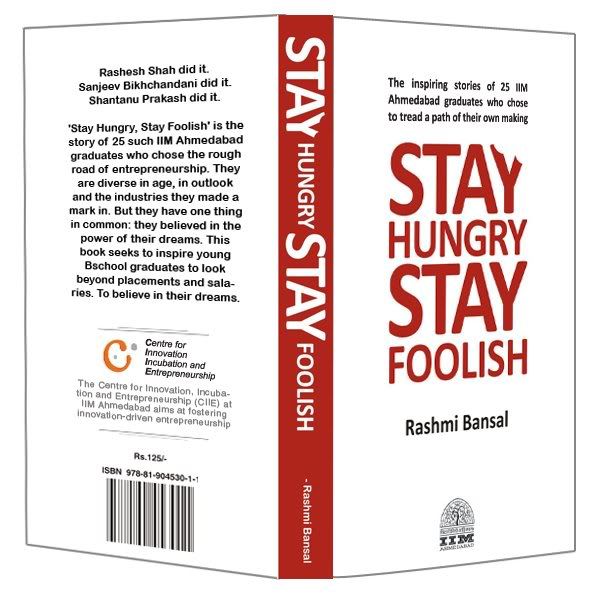
It has been ages since I last wrote a review of any sort and it has been one remarkable book that has made me take this up after such a long time. Titled "Stay Hungry Stay Foolish" after the famous concluding words of Steve Jobs at a B-School convocation, the book tells the stories of 25 IIM Ahmedabad pass outs who made it big as first generation entrepreneurs. The book contains stories as implausible as the ones of Naukri.com and Shree Renuka Sugars to ones as different from the league as GiveIndia and Ekalavya School.
All 25 stories in the book are as similar to each other as they are distinct which goes on to show, in my mind, the talent of the author, Rashmi Bansal, an entrepreneur herself. Rashmi writes a popular blog Youth Curry and is the founder and editor of the youth magazine JAM. In this book, written with as much fluidity as is found in her blog, Rashmi uses a generous dosage of her own insights, opinions, and views without introducing any bias in each of the stories. These insights, often expressed employing very matter-of-fact mannerisms (read, in italicized Hindi), are what make the stories believable and at the same time, grand and singularly unique.
The arrangement of author's thoughts is well brought out as it starts from her own notions and expectations about the entrepreneur and his/her story. Moving on to the facts, the author provides clear insight into the background from which these entrepreneurs started out. She then moves to the interview approach which is more like a free flowing thought expression than a Q & A. Even though it is obvious that the author had a certain set of questions she posed to all interviewees in the book, the way she has avoided putting the questions down and the manner in which she has stopped short of publishing responses to all such questions for all interviewees shows a fair amount of discretion.
The final section on advice for entrepreneurs is really icing on the cake as it puts across the personality of the entrepreneur and his/her story in a nutshell. Drawing from their own experiences, the entrepreneurs very succinctly put across their take on the entire journey and the struggle to achieve what they have. Although the takes are as different from each other as chalk and cheese, they still provide a profound perspective into the decisions that the concerned entrepreneur took and what anyone in a similar scenario should logically go for or avoid.
Notwithstanding the insights and views included in the book's narrative by the author, there still seems something missing as far as an independent take on the entire subject of entrepreneurship is concerned. An additional chapter on the author's own opinions, though not holding a torch to the other chapters which necessarily deal with all these fascinating stories, would still have gone a long way in threading the thoughts and ideas together. As of the moment, though there are many of them and this should be appreciated, they are just floating in the air right through the pages. For all you know, such a chapter may have just answered the question that the title of this blog post poses.
Before getting started on this book, I had thought that I will be able to truly relate to two specific stories where I have been personally associated with the protagonists at a professional level. However, it was a pleasant surprise to finally discover that my bonding with the book's stories ran deeper. To say that the book was inspirational and provided motivation would definitely be an understatement. I could almost see the past, present, and future of myself and so many others like me in one story after another and that, Ms Bansal, is quite creditable from where you stand as a debutante.
Tuesday, January 16, 2007
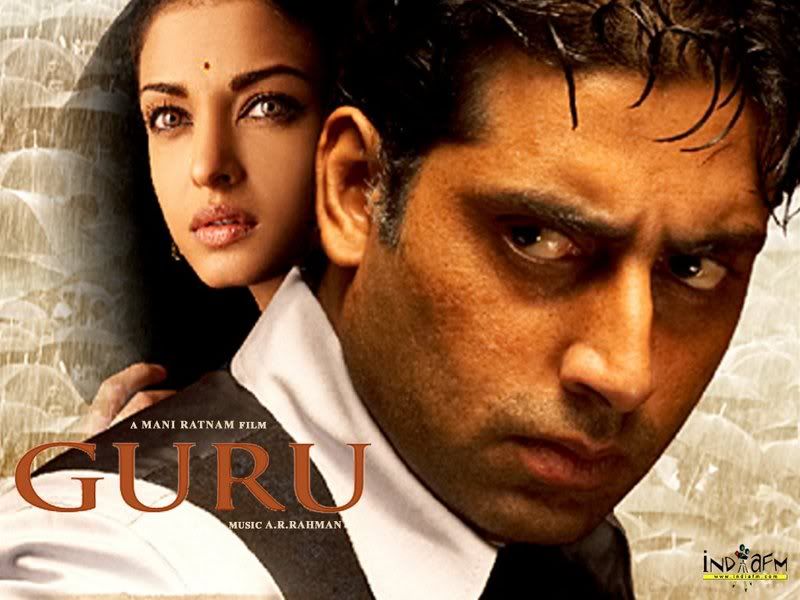
Gurubhai Gurubhai aavya che...
tha nahi hai...mera naam Gurukant Desai tha...hai...aur aage bhi rahega

As Mani Ratnam's Guru carries his swagger to the microphone and smirks at hearing of competition's efforts at undermining him, the audience does not know whether to empathize with him for the background that he has risen from, or to protest the absolute lack of respect the rich industrialist has shown for the law of the land.
Despite the dropped (once-too-often) hints of the movie's story being based on the life of Dhirubhai Ambani and of course, the several sequences of the movie mirroring memorable instances of the life of Reliance's founder, there is still quite a lot of originality of idea. Mani Ratnam makes sure that he does not fall prey to the biographical conundrum, but at the same time, he makes optimum use of the sheer magnetism of Dhirubhai's story.
From the protagonist venturing out to Turkey, learning new ideas and getting his self-confidence going, to his coming back and setting up his own business and earning for himself, the story of Guru is a journey across people who ditched him, people he ditched in return, and of course, the several innovative ideas that are used in both the processes. But to limit the scope of this movie to just that would be injustice to the little nuances that the director and the actor are able to bring to the story, refining it beyond just another dramatic rendition of an interesting sequence of events.
Abhishek Bachchan, Aishwarya Rai, Madhavan, Vidya Balan, the indomitable Mithunda and of course, the talented support cast have made the life and times of Gurukant Desai stand out, almost to perfection. Most of the actors, Abhishek clearly towering above the others, have given a unique twist to the characters they play, infusing life into them and making sure that the viewer is clearly able to see the mental makeup of each of them.
Aishwarya is not just looking drop dead gorgeous (perhaps more than any of her previous performances, if that is humanly possible) but also manages to bring the right expressions on her face at the right time, and that, I am sure would be a welcome change for fanatics like me. Madhavan manages to portray a sincere and intelligent image, just right for the character he portrays, never trying to overshadow the chief protagonists of the movie and yet managing to make his presence felt.
And then there is Abhishek, the dynamite of this package. If Amitabh is to be believed, his performance has actually brought him to tears. Even if you can not be so superlative, you will nevertheless realize that this one has been one of Abhishek's (or any other actor's, for that matter) lifetime performances. Before moving on to the technical aspects of the movie, one must mention the one and only Mithunda, who keeps showing now and again why he is rated as one of the better actors of the Indian movie industry and why he has all these acting awards in his kitty. From the mentor that he is to the young Guru, to the person who encourages his muse to take on the successful Gurubhai, to the aged guardian of an unwell Guru, he manages the transitions with characteristic ease and elan.
What does one say about the director of such a movie, except perhaps salute his genius and marvel at his knack of identifying the audience's nerve and hitting on it like no one has ever done before? Mani Ratnam, with this movie, has moved on from a mere story teller to someone who is much wiser to the needs of the industry. And industry it is that he is working in, which is apparent from the various interviews Mani gave to the media as a part of the movie's publicity. Clearly mentioning that the movie is not a biography and yet discussing the story's stark similarities to Dhirubhai's life (right to the episode of bribing a highly placed minister), Mani has proved his intellect beyond doubt.
Audiences across the country have enjoyed watching this movie and once they are done with drawing the parallels between Dhirubhai, Reliance, and the movie's story, they have praised the director/actors no end. The movie's credits notwithstanding, the important thing that has come to the forefront from this movie is the very idea that people have been talking about it. In addition to being a good omen for the fortunes of this movie and its stakeholders, it also augurs well for the Indian movie industry which can now consider another door open as far as finding ideas for making movies are concerned.
Monday, August 21, 2006
Family's family!
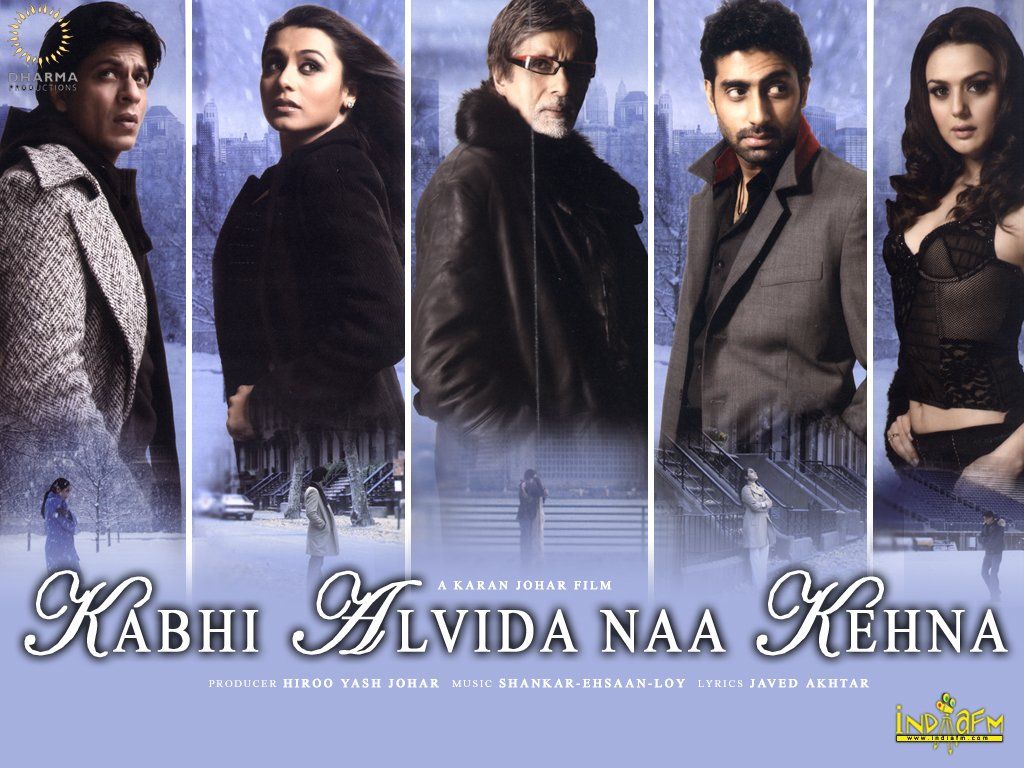
99 out of 100 people you meet will advise you against watching this movie, as they did to me. I still went for that one time and perhaps, you ought to, as well.

Like me, you may have been intrigued with the characters of the movie and the director coming on forums like NDTV's We, the people and discussing things other than what you would expect people who have been parts of a Karan Johar production to discuss. I mean, how many times have you seen a Shobha De discussing a Karan Johar movie other than to rubbish it and the ideal family values that it portrays? How many times have you seen a Shahrukh Khan straying from the "I am dream walking into my romantic roles" statements of his to something like "I did not know and did not believe in the character that I was playing"?
Even if you haven't seen all Karan movies, take it from me since I have that you will not find anything like Kabhi Alvida Na Kehna if you take your mind in the past. In fact, the movie is as much away from tradition as it could have been. Amidst protests that accuse the movie of showing things in an irresponsible light that may encourage people to take the easy way out of problems and some others that claim that the movie does not show what is real in the Indian context and is too far fetched to be of any interest to the audience, I will like to put forth that the very fact that the movie has been able to raise such aspects and critique means that there is something more to it than being claimed by some.
At no point do I want to say that I liked the movie. I did not and the movie had a lot of glitches and unnecessary package for me to enjoy it totally but that it did provoke some thought process inside me, I can not deny. Unlike its predecessors who have raised the bad marriage question many times in the past, KANK tries to find solutions in the coves that have been unexplored by Bollywood so far. As Karan Johar says in the chat show, his friends and contemporaries (which would mean people like me and others of my age group) are facing more marriage woes than ever before and more importantly, they have no compunctions in looking at the easy way out, get out of a bad marriage.
At the cost of giving away some part of the movie's story (which is not too much of a suspense, anyway), let me point the crux of the matter here. There are two couples not hitting it off with each other and one part each of these couples gets disjointed from the traditional view of marriage and tries and finds love outside marriage. The transition from saying "Family is family" with some conviction to mocking at the same words is what Kabhi Alvida Na Kehna is all about. It does take more than three and a half hours to say that and despite this being the worst aspect of the movie, I believe that the job has been done and the message conveyed in as explicit a manner as there could have been.
Right from the Sexy Sam character of Amitabh Bachchan to the anti-tradition, pseudo-modern undertones of the story, the movie is set in the context of the urban young and there, too, the concentration is more on those who have already broken away from the mould, if not in reality then at least in the head. Somewhere along the line, the intended audience of this movie is prepared to let go of the threads that bind them to the Indian way of treating relationships. A stark contrast to earlier movies of Karan Johar that have always shown the weakest of Van der Waal's forces enough to not only sustain, but even mend the most embittered of relationships, KANK shows that there comes a time when even the Indian says "enough is enough".
The best part about such giving up of relationships in the movie is that it is not driven by something very concrete like the man beating the wife or the wife being a promiscuous cheat, but the more subtle feelings of being left out, being forced to make a "samjhauta" are at the back of the redical steps...small things that we all know, make all the difference in real life, as well.
Cut to what everyone has been talking about...yes, the movie is horribly long, Amitabh Bachchan is wasted in a story that did not need him, but for giving it the conviction and stage that only he can provide, there are too many tears and wasteful, repetitive moments, Rani Mukherjee's acting is limited to the use of glycerine and Shahrukh Khan's to being the foul mouthed jerk whose sense of humour is not only foul but without even the last tinge of creativity. The screenplay is non-existent and the dialogues could have been so much more sharper. Karan Johar fails when it comes to details, but I will still say that he gets the bigger picture right.
In terms of the actors, not commenting on Amitabh's blink and I am gone role, rest of the cast has been mediocre, to say the least. The fault would once again lie on the screenplay and the director who seem to fail miserably in infusing any breath of fresh air at any stage in the movie. Agreed that the content and the context did not allow for too many deviations from the stark settings, but the only deviations that are there are too crass and awkward for the actors to do any justice to the same. The careerist bitch played by Preity is so easily converted into the lovelorn wife that it becomes difficult to digest the contrast between one situation showing her leave a job for her husband and the other where she ends the relationship with her husband in a jiffy. Some consistency would not only have done wonders for the movie, but also allowed the actors to give a sane performance. I won't, as I said, comment on what Amitabh Bachchan was doing in this movie so that also leaves Kiron Kher out of the ambit. Honestly speaking, the two were wasted beyond redemption.
Music of the movie works and is quite in line with the story and events as they unfold. All said and done, I feel that though the movie has fallen to the neglect of details, the idea behind it has been pretty brave and unique and as such, it does deserve that one time in the theatres (watching it at home might not be able to sustain your interest for enough time to let the movie impress you in any way). I, for one, will not advise anyone against watching this movie!